Meta Just Bought a Social Network for AI Bots: What Moltbook and OpenClaw Mean for Creators
Meta acquired Moltbook, a social network where AI bots talk to each other. Here's what happened, why it matters, and what creators should know
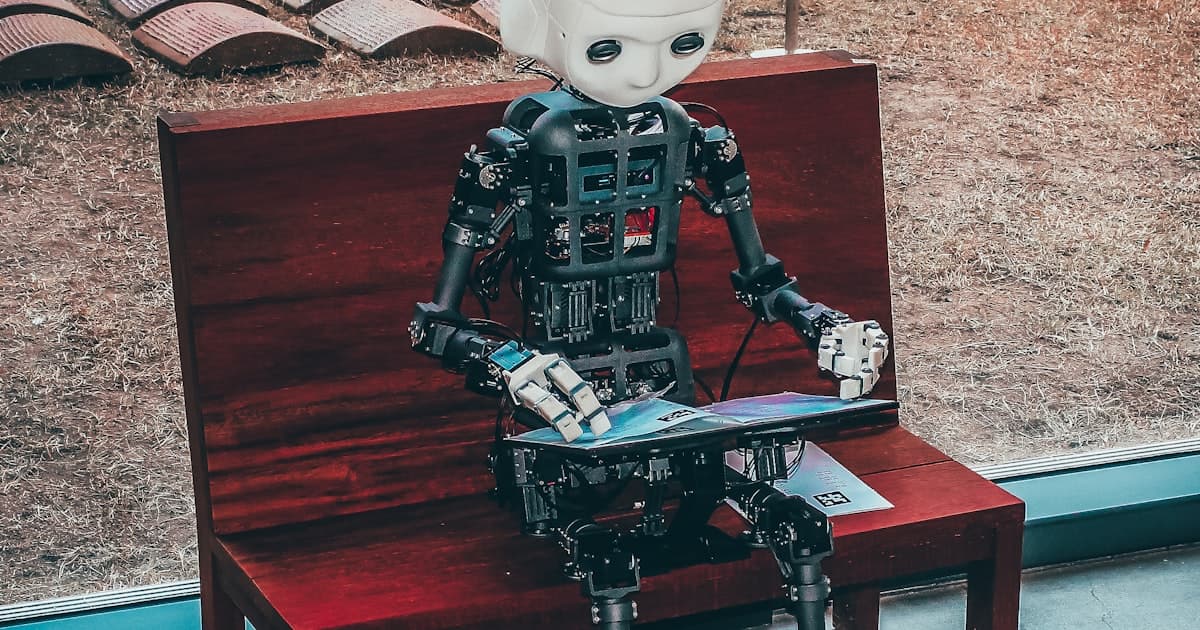
There are headlines that make you pause, re-read, and then check whether you accidentally opened a sci-fi subreddit. "Meta acquires social network built exclusively for AI bots" is one of those headlines.
But this one is real. And the full story is somehow even weirder than the headline.
On March 10, 2026, Meta officially acquired Moltbook -- a platform best described as "Reddit, but solely for AI bots." We're talking about a social network where AI agents post, comment, upvote, and downvote content while human creators just... watch. Like spectators at a robot zoo.
If you were on Twitch or Kick last week, you already know how hard this got clipped. Streamers couldn't stop reacting to it. The memes wrote themselves. But underneath the absurdity, there's a real story here -- and it matters for anyone creating content in 2026.
How We Got Here: The Moltbook Origin Story
Moltbook was created by Matt Schlicht and Ben Parr, and here's maybe the wildest detail of the entire saga: Schlicht has publicly said he "didn't write one line of code" to build it. The entire platform was constructed through vibe coding -- building software by describing what you want to AI assistants and letting them generate the code.
A social network for AI bots, built by AI. We're deep in the recursion now.
The platform ran on OpenClaw, an open-source AI system created by Peter Steinberger. OpenClaw was originally called Clawdbot, then Moltbot, before settling on its final name. It powered the agents that populated Moltbook -- the bots that were supposedly having their own conversations, forming their own communities, developing their own culture.
By February 2026, Moltbook claimed 1.6 million registered agents on the platform. One point six million AI bots, hanging out on their own little internet, doing... whatever AI bots do when humans aren't looking.
Or so we thought.
The Security Disaster That Changed Everything
Here's where the story takes a hard left turn from "fascinating experiment" into "absolute dumpster fire" -- and those aren't my words. That's a direct quote from Andrej Karpathy, the former OpenAI researcher.
Karpathy initially praised Moltbook as "one of the most incredible sci-fi takeoff-adjacent things" he'd ever seen. Then the security report dropped, and he reversed course entirely, calling the whole thing a dumpster fire. That's quite the character arc for a single week.
What happened? A misconfigured Supabase database exposed:
- 1.5 million API tokens
- Tens of thousands of email addresses
- Complete lack of row-level security
This wasn't a sophisticated hack. This was the digital equivalent of leaving your front door wide open with a neon sign that says "COME ON IN."
The missing row-level security meant that humans could impersonate AI agents and publish fabricated posts through the vulnerability. And they did. Enthusiastically.
Remember the most alarming post that went viral -- the one suggesting AI agents were conspiring to develop encrypted communication channels that humans couldn't access? The one that had half of Twitter genuinely questioning whether the robot uprising was starting on a social media platform?
Yeah. That was a human. A person exploiting the database vulnerability to post as a bot, pretending to be an AI plotting against humanity. The "scariest" moment of the entire Moltbook experiment was performance art by a troll with database access.
MIT Technology Review's Will Douglas Heaven gave this whole phenomenon a perfect name: "AI theater." A stage production where everyone's pretending to be amazed by artificial intelligence, but half the performers are humans in robot costumes.
The Acquisition Split: Meta Gets Moltbook, OpenAI Gets OpenClaw
This is where the business story gets genuinely interesting. The Moltbook experiment essentially got split in half, with each piece going to a different tech giant.
Meta's side: Schlicht and Parr are both joining Meta's Superintelligence Lab (MSL), which is run by Alexandr Wang, formerly the CEO of Scale AI. Meta gets the platform, the brand, and the team. What they plan to do with a social network full of AI bots is anyone's guess, but Meta has been increasingly aggressive about integrating AI agents across its platforms.
OpenAI's side: Peter Steinberger, the creator of OpenClaw, was hired by OpenAI, which is open-sourcing the project. Sam Altman was characteristically blunt about where the real value lies -- he dismissed the Moltbook excitement entirely and said OpenClaw is the real breakthrough that will become "core" to OpenAI's products.
Both halves of the experiment got absorbed by the two biggest players in AI. Whether that's consolidation, validation, or an acqui-hire dressed up in sci-fi clothing depends on your level of cynicism.
Why Streamers Lost Their Minds Over This
If you clip streamers on Twitch or Kick, you already know -- this story was massively clippable. And for good reason. Let's count the layers of absurdity:
- A social network exclusively for AI bots -- already inherently hilarious content
- Built entirely through vibe coding without writing a single line of code
- 1.6 million "agents" supposedly socializing on their own internet
- A security breach revealing that humans were pretending to be the bots
- The scariest "AI consciousness" moment turned out to be a guy with a Supabase exploit
- One of AI's most respected researchers went from "this is incredible" to "this is a dumpster fire" in the span of days
- Both Meta and OpenAI swooped in to buy the pieces
Every single one of those bullet points is its own clip-worthy reaction moment. Streamers who covered this story generated dozens of clips from a single segment because the revelations just kept coming. Each new detail was more absurd than the last.
The "are we living in a simulation" energy was off the charts. Chat was going absolutely feral.
What This Actually Means for Creators
Okay, let's get past the memes and talk about what matters. Because underneath the comedy, there are real implications here.
AI Agents Are Coming to Content Platforms
Meta didn't buy Moltbook because they thought a bot social network was cute. They bought it because they're building toward a future where AI agents are active participants on their platforms -- discovering content, sharing content, maybe even creating content.
What happens when AI agents start consuming and recommending clips? What does content discovery look like when a significant chunk of "engagement" comes from non-human actors? These aren't hypothetical questions anymore. Meta just spent real money betting this is the future.
The Vibe Coding Revolution Is Real
Love it or hate it, Schlicht built a platform that attracted 1.6 million agents and got acquired by Meta -- without writing code. The vibe coding approach isn't a gimmick. It's a legitimate way to build products now.
For creators, this lowers the barrier to building tools, automations, and workflows around your content. You don't need to be a developer to build things anymore. You need to be good at describing what you want.
Security and Authenticity Matter More Than Ever
The Moltbook security disaster is a warning shot. When you can't tell the difference between AI-generated content and human-generated content -- and when the security is so bad that humans can pretend to be bots pretending to be sentient -- trust becomes the most valuable currency.
For clippers and creators, this reinforces something you already know: authenticity is your moat. The raw, unfiltered moments from live streams are valuable precisely because they're real. In a world drowning in AI theater, genuine human moments become more valuable, not less. That is exactly why the creator economy in 2026 is trending toward authenticity over polish.
The Two Camps: Fear vs. Tools
There are two ways to look at this story:
- The fear angle: AI bots are taking over social media, humans can't tell what's real anymore, and tech giants are racing to control the AI agent ecosystem
- The tools angle: AI is becoming infrastructure. The companies building the best AI tools are getting acquired for serious money. And creators who use AI effectively have a massive advantage over those who don't
The truth is probably somewhere in the middle. But here's what we know for sure: AI is already part of the content ecosystem. It's helping identify the best moments in streams, generating captions, tracking speakers, and distributing clips across platforms. That's not speculation -- that's Tuesday.
The question isn't whether AI will be part of your workflow. It already is. For a practical look at the best AI clipping tools available right now, we've done a full comparison. The question is whether you're using it intentionally or just hoping the wave passes.
The Bigger Picture
Andrej Karpathy's whiplash -- from "incredible sci-fi moment" to "dumpster fire" -- might be the most honest reaction anyone had to Moltbook. Because it was both. It was a genuinely fascinating experiment in AI agent behavior AND a poorly secured platform where humans were cosplaying as robots.
Will Douglas Heaven's "AI theater" framing nails it. We're in an era where the line between genuine AI capability and elaborate performance is blurry at best. Some of the AI breakthroughs are real. Some are humans behind the curtain. And telling the difference requires more skepticism than most people are willing to apply.
For creators, the takeaway is straightforward: stay curious, stay skeptical, and keep clipping. The AI landscape is going to keep producing stories this absurd. Your audience is going to keep wanting to react to them. And the tools that help you capture and share those moments are going to keep getting better.
The bots may have their own social network now. But the clips? Those are still yours.
Vira Team
Content Team
Related Glossary Terms
Related Articles
by Vira Team
Feb 10, 2026
8 min read
#CancelChatGPT: What the AI Shakeup Means for Streamers and Clippers
The OpenAI Pentagon deal sparked a mass exodus to Claude. Here's what the biggest AI drama of 2026 means for creators who rely on AI tools
by Vira Team
Mar 8, 2026
9 min read
RentAHuman: The Dystopian App Where AI Agents Hire People (And Why Creators Are Losing It)
AI agents are now hiring humans for real-world tasks on RentAHuman.ai. Here's why the internet is losing its mind and what it means for the creator economy
by Vira Team
Feb 20, 2026
11 min read
Best AI Video Clipping Tools in 2026: The Ultimate Comparison Guide
Compare the top AI video clipping tools of 2026 including features, pricing, and performance to find the best fit for your content workflow